Dukaan vs WhatsApp-First Selling: What Actually Works for Indian Sellers in 2026
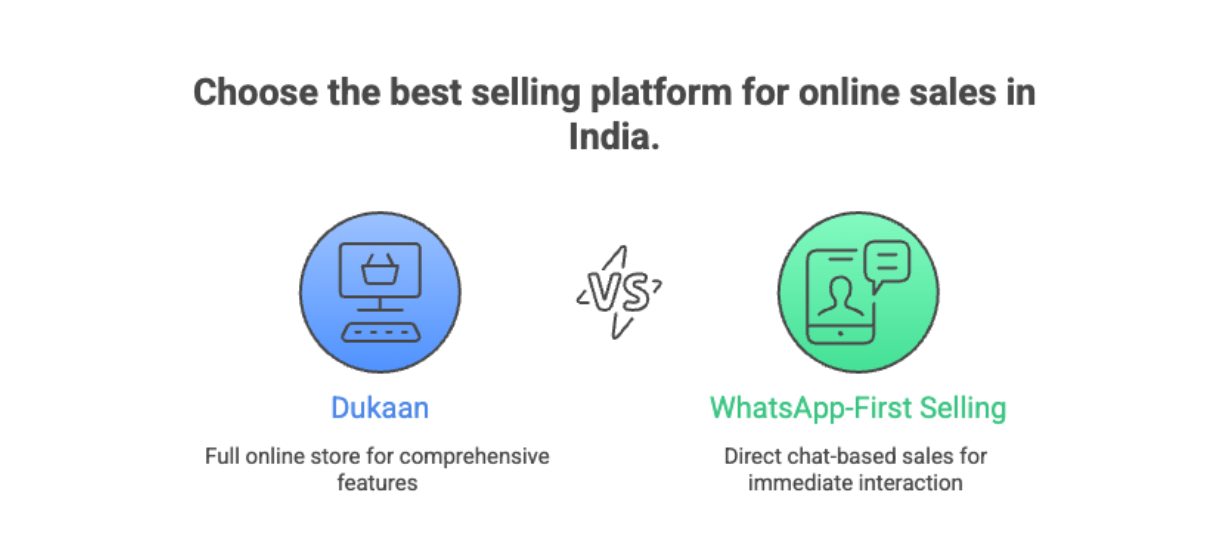
If you’re selling online in India today, chances are you’ve faced this question:
Should I build a full online store with Dukaan, or just sell directly on WhatsApp?
There’s no one-size-fits-all answer. Both approaches solve different problems and for many Indian sellers, the smartest choice lies somewhere in between.
This guide breaks down Dukaan vs WhatsApp-first selling, explains where each works best, and helps you choose the right path based on how Indian customers actually buy in 2026.
Dukaan vs WhatsApp-First Selling
Dukaan is best for website-led ecommerce brands that rely on search traffic and paid ads. WhatsApp-first selling works better for Indian sellers who close sales through chat, UPI payments, and direct conversations. The right choice depends on whether your business is website-driven or chat-driven.
What Dukaan Is Designed For
Dukaan is a store-first ecommerce platform. It helps Indian businesses create a full online shop with:
- A standalone website (and PWA)
- Product pages, cart, and checkout
- Payment gateways like Razorpay, UPI, cards
- Shipping and logistics integrations
- SEO, ads, and basic marketing tools
For sellers who want a proper ecommerce presence — similar to Shopify but localized for India — Dukaan does the job well.
When Dukaan Makes Sense for Indian Sellers
Dukaan is a strong fit if you:
- Have a large catalog
- Want Google search traffic
- Run paid ads to a website
- Are building a long-term D2C brand
- Are comfortable managing themes, plugins, and store settings
In short, Dukaan is designed for website-led selling.
What WhatsApp-First Selling Really Means
WhatsApp-first selling flips the model.
Instead of pushing customers to a website, selling happens on WhatsApp without PDFs:
- Product discovery
- Questions and negotiations
- Order confirmation
- Payments via UPI or links
- Support and follow-ups
This approach works extremely well in India especially in Tier-2 and Tier-3 cities — because:
- Customers already trust WhatsApp
- No learning curve is required
- Conversations feel personal, like a local shopkeeper
Common Examples of WhatsApp-First Sellers
- Boutiques and clothing sellers
- Kirana and FMCG sellers
- Wholesalers and resellers
- Home bakers and small brands
- Service providers taking bookings
For these sellers, chat converts faster than websites.
Dukaan vs WhatsApp-First Catalog (e.g., SellEzzy): Which Makes More Sense for WhatsApp-Led Selling in 2026?
In 2026, the decision is not about choosing a “better platform,” but choosing the right selling flow.
Dukaan makes sense when your website is the center of your business.
SellEzzy fits naturally when WhatsApp is already where customers discover, ask, and buy.
The Middle Path: Structured WhatsApp Selling
Why WhatsApp chats lose orders , Many sellers are now moving to a WhatsApp-first system with structure.
Instead of:
- Sending PDFs
- Dumping galleries of images
- Repeating prices in chat
what a digital catalog link actually is: They share one live catalog link
- Customers browse on their own
- Prices and availability stay updated
- Orders come back in a structured format
- Sellers get visibility into what customers actually viewed
This keeps WhatsApp as the main channel without the chaos.
Tools like SellEzzy are built specifically for this middle path:
- Not a heavy website builder like Dukaan
- Not raw chat selling either
- A lightweight digital catalog designed to work with WhatsApp
Importantly, platforms like SellEzzy also provide full analytics visibility, so sellers can see:
- Who opened the catalog
- Which products got attention
- Where customers dropped off
That’s something neither PDFs nor native WhatsApp catalogs offer.
When Should You Choose Dukaan vs WhatsApp?
For many Indian sellers, the best answer isn’t “Dukaan or WhatsApp”.
It’s:
- WhatsApp for discovery, trust, and conversion
- A lightweight catalog system for structure and clarity
- Optional website later, when scale demands it
This hybrid, WhatsApp-first approach is where most growth is happening especially outside metro cities.
Final Takeaway
- Dukaan is built for websites
- WhatsApp is built for conversations
- Modern Indian selling needs both — without complexity
If your customers live on WhatsApp, your selling system should too — just without the chaos of PDFs and endless chats.
Frequently Asked Questions About Dukaan vs WhatsApp Selling
1. Is Dukaan better than WhatsApp selling?
Dukaan is better for businesses that rely on website traffic, paid ads, and structured ecommerce checkout. WhatsApp-first selling works better for sellers who close sales through direct conversations and UPI payments.
2. Can I sell online in India without building a website?
Yes. Many Indian sellers operate entirely through WhatsApp using product catalogs, payment links, and chat-based order flows without maintaining a website.
3. What is WhatsApp-first selling?
WhatsApp-first selling means product discovery, conversation, order confirmation, and payments happen primarily through WhatsApp instead of a traditional ecommerce website.
4. Is Dukaan good for small sellers?
Dukaan works well for sellers building a brand website, but for very small or chat-driven businesses, managing a full store setup may feel complex compared to WhatsApp-led selling.
5. Which model converts better in Tier-2 and Tier-3 cities?
In many Tier-2 and Tier-3 Indian cities, WhatsApp-first selling converts faster because customers prefer direct interaction and trust chat-based communication.
6. Can I combine Dukaan and WhatsApp selling?
Yes. Many sellers use a hybrid model where a website handles ads and discovery, while WhatsApp handles conversations and final order confirmation.