Why Small Shops Lose Orders in WhatsApp Chats (And How to Fix It in 2026)
WhatsApp is where most Indian customers ask their first question.
But for many small shops, it’s also where orders quietly disappear.
Not because products are bad.
Not because prices are high.
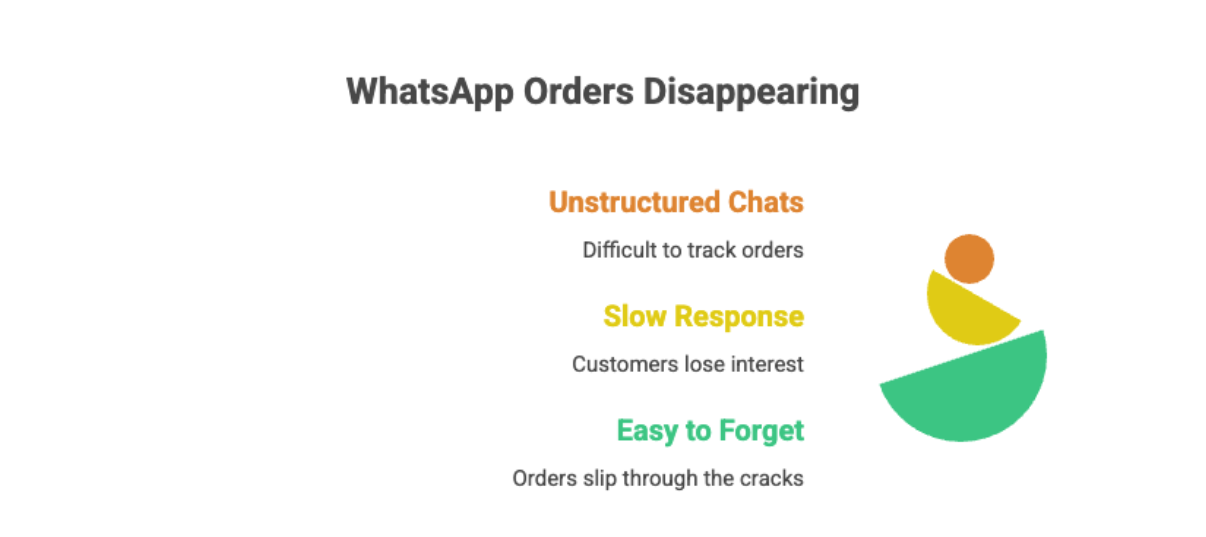
But because WhatsApp chats are unstructured, slow, and easy to forget.
If you’ve ever felt like “customers showed interest but never ordered”, this guide explains exactly why and what actually works.
The Real Reason Orders Are Lost on WhatsApp
Most small sellers believe they lose sales because of price competition.
In reality, data shows they lose sales because of friction and delay.
WhatsApp selling fails when:
- Customers don’t get answers fast enough
- The next step is unclear
- Chats get buried or forgotten
- Buying feels confusing or risky
Let’s break this down.
1.Slow Replies Kill Conversions
WhatsApp customers expect near-instant responses.
If someone asks:
“Price kya hai?”
and gets a reply 2–3 hours later, chances are high they’ve already bought from someone else.
This happens because:
- One phone handles family + business chats
- No greeting or away messages
- No price visibility unless the seller replies
What works better:
Showing prices upfront through a catalog or link so customers don't have to wait to decide. This is one of the core WhatsApp catalog limitations Indian sellers face the native setup simply wasn't built for speed at scale.
2.No Clear Next Step in Chat
Many chats die like this:
- Customer asks a question
- Seller replies with information
- Conversation ends… silently
Why? Because there’s no clear next step.
Customers need direction:
- “Add items to cart”
- “Tap here to pay”
- “Confirm quantity & address”
Without this, even interested buyers forget to respond especially if they opened the message while busy.
What works better:
A structured flow where customers can browse, select, and order without typing long messages. That's the foundation of how to sell on WhatsApp without PDFs less friction, more confirmed orders.
3.WhatsApp Broadcasts Feel Like Spam
Broadcasting long text lists, random offers, or repeated images may feel like marketing—but to customers, it often feels like spam.
Common issues:
- Customers mute or ignore messages
- Messages only deliver if numbers are saved
- No real conversation or personalization
This kills trust and repeat orders.
What works better:
Sharing a single clean link or catalog when the customer shows interest—rather than pushing messages.
4.Too Many Steps in the Buying Journey
A typical broken WhatsApp flow looks like this:
Photos → PDF → Website → Payment app → Confirmation message
Every extra step increases drop-offs.
Customers abandon when:
- PDFs don’t open
- Prices aren’t clear
- Payment feels confusing
- They have to switch apps repeatedly
What works better:
One place to browse products, see prices, and place an order without leaving the chat context. That's essentially what a digital catalog is built to do and why it fits naturally into WhatsApp selling.
5.Using Personal WhatsApp for Business
Many shops still sell from personal WhatsApp accounts.
This creates problems:
- No catalog
- No quick replies
- No order tracking
- No reminders or follow-ups
As volume increases, chats get messy and warm leads quietly disappear.
What works better:
Using business tools that bring structure catalogs, order views, and simple follow-ups without turning WhatsApp into a full website project. If you're not sure where to start, how to create a digital catalog for WhatsApp is simpler than most sellers expect.
The Silent Killers of WhatsApp Sales
Here’s what usually kills the sale, without the seller realising it:
- Customer opened your message but forgot to reply
- Customer wanted to browse quietly, not chat
- Customer liked the product but didn’t trust a personal number
- Customer needed time—but there was no follow-up
None of these are price problems.
They’re process problems.
How Structured WhatsApp Selling Fixes This
Successful WhatsApp sellers in 2026 focus on three things:
- Speed – Customers see prices and products instantly
- Clarity – One clear path from browsing to ordering
- Structure – Chats don’t decide sales; systems do
This is why many sellers now complement WhatsApp chats with simple digital catalogs and order flows so customers can act even when the seller is busy or offline.
Tools like SellEzzy fit naturally here, not as “another ecommerce app,” but as a way to:
- Show products clearly
- Reduce back-and-forth messages
- Keep track of who ordered what
- Follow up without digging through chats
The chat remains personal but the selling becomes reliable.
TL;DR
Small shops don’t lose WhatsApp orders because of pricing; they lose them because chats are slow, unstructured, and easy to forget. Customers drop off when replies are delayed, next steps aren’t clear, or buying feels confusing. The fix isn’t more messages, but better structure: clear product visibility, simple ordering, and fewer steps. In 2026, the sellers who win on WhatsApp are the ones who remove friction, respond instantly through catalogs or links, and stop relying on memory to close sales.
Frequently Asked Questions About Lost WhatsApp Orders
1. Why do customers stop replying on WhatsApp?
Customers stop replying when responses are delayed, prices are unclear, or the buying process feels confusing. Most drop-offs happen due to friction, not price.
2. How fast should I reply on WhatsApp to avoid losing sales?
Ideally within minutes. Studies show customers often buy from the seller who replies first. Delays of even 1–2 hours significantly reduce conversion rates.
3. Does sending PDFs reduce WhatsApp conversions?
Yes. PDFs create friction because customers must download and scroll through files instead of browsing instantly inside chat.
4. Why do WhatsApp leads go cold after asking for price?
When sellers reply with only information and no clear next step, customers lose momentum. Without a clear call to action, chats fade naturally.
5. Is WhatsApp broadcast marketing effective?
Broadcasts work only when customers have saved your number and expect communication. Repeated, generic broadcasts often feel like spam and reduce engagement.
6. How can small shops improve WhatsApp sales conversion?
Small shops improve conversions by showing prices upfront, reducing steps, using structured catalogs, and guiding customers clearly from browsing to payment.