How to Sell on WhatsApp Without PDFs (What Actually Works in 2026)
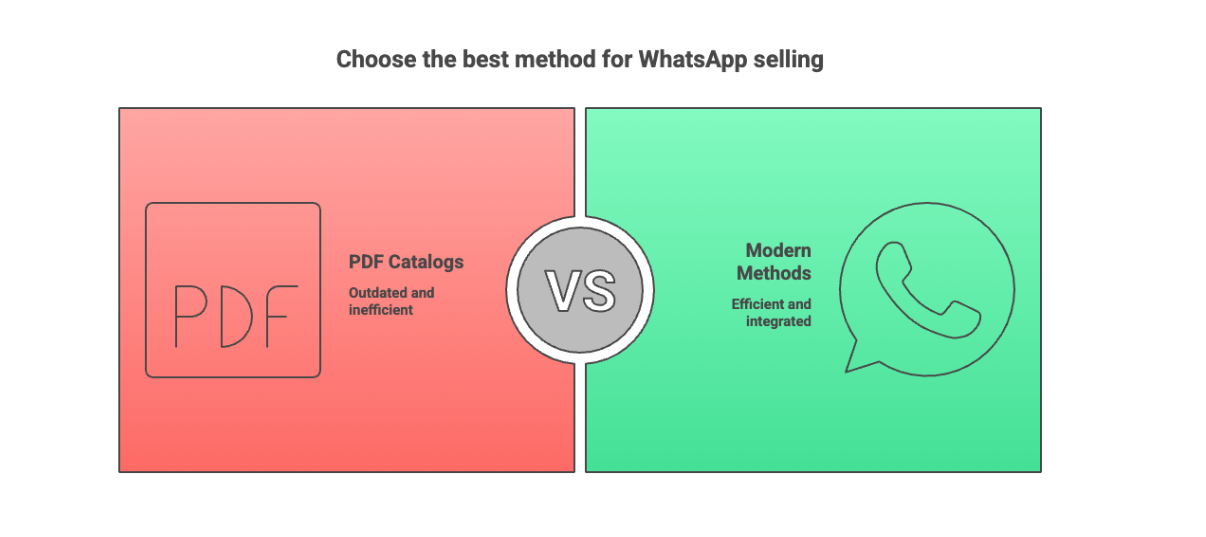
If you’re selling on WhatsApp and still sending PDF catalogs, you’re not doing anything “wrong” , you're just using an outdated method.
PDFs were never built for chat-based selling. They were designed for email and desktop viewing. On WhatsApp, they quietly kill momentum, delay decisions, and make buying harder than it needs to be.
The good news is:
“ You can sell completely on WhatsApp without PDFs, and many Indian sellers already do this using catalogs, links, and simple automation that fits naturally into chat.”
This guide breaks down how WhatsApp selling works without PDFs, why PDFs fail, and what modern sellers are switching to instead.
Why PDF Catalogs Fail in WhatsApp Selling
Most sellers use PDFs because they feel “professional.” In reality, they create friction.
Here’s what usually happens:
- Customers hesitate to download large files
- PDFs don’t open properly on many phones
- Once sent, prices can’t be changed
- You never know who opened the PDF or what they saw
- Customers must manually type orders, leading to confusion or drop-offs
None of this is visible immediately — but over time, it leads to missed orders and slow conversions.
That’s why WhatsApp selling has moved away from documents and toward live, interactive formats.Especially structured digital catalogs designed for mobile browsing.
3 Proven Ways to Sell on WhatsApp Without PDFs
1.Using WhatsApp Business Catalog
WhatsApp Business includes a built-in catalog feature that lets sellers showcase products directly inside WhatsApp.
Instead of sending a PDF:
- You add products with photos, prices, and descriptions
- Share them as product messages in chat
- Customers browse, add items to cart, and send orders back in the same conversation
For sellers using WhatsApp Business API (via tools like Interakt, WATI), this becomes more advanced with:
- Multi-product messages
- Interactive lists and buttons
- Catalog buttons that open inside WhatsApp
Everything stays inside chat. No PDFs involved.
2.Selling with Structured Chat Messages
Some sellers skip catalogs and sell entirely through chat — but in a structured way.
Instead of dumping photos:
- Share one clear product image
- Add a short description, price, and availability
- Guide the customer with quick replies or buttons
To make this scalable:
- Use WhatsApp Business quick replies for FAQs
- Use list messages or flows to collect selections and addresses
- Confirm orders with structured messages instead of documents
This keeps the experience conversational while avoiding chaos.
3.Taking Payments via UPI & WhatsApp Pay
PDF invoices are not required to collect payments.
In India, sellers commonly use:
- WhatsApp Pay (UPI-based)
- UPI payment links
- Payment links from gateways like Razorpay or Cashfree
The flow is simple:
- Customer confirms items
- Payment link is shared
- Customer pays
- Confirmation comes back in WhatsApp
An order summary message replaces the need for a PDF invoice.
Why PDF Selling Breaks at Scale for Indian Sellers
As your WhatsApp inquiries increase, PDFs become unmanageable.
At volume:
- You resend the same PDF dozens of times
- Prices change but old PDFs keep circulating
- You lose track of who showed interest
- Follow-ups become guesswork
This is where many sellers quietly start looking for a single link instead of a file, something they can update once and share everywhere.
What Is a Live Digital Catalog Link?
Instead of sending a static document, modern sellers share a live catalog link.
When customers click:
- A clean catalog opens in their browser
- Products are organized and searchable
- Customers add items to cart
- Orders are sent back to WhatsApp as a structured message
No downloads. No confusion. No outdated prices.
This approach works naturally with WhatsApp because it supports chat, not documents.
How Structured WhatsApp Selling Fixes Missed Orders
Many sellers start with WhatsApp’s native catalog. But as products grow, they want:
- Easier updates
- Better organization
- One link they can share on WhatsApp, Instagram, or ads
- Visibility into what customers are viewing
This is where tools like SellEzzy quietly fit in, not as “another app,” but as a way to turn WhatsApp selling into a cleaner system.
Instead of designing PDFs or manually replying:
- Products live in one digital catalog
- Prices update instantly
- The same link works everywhere
- Orders come back structured on WhatsApp
The selling still happens on WhatsApp — the chaos just disappears.
PDF Catalog vs Digital Catalog (Why Sellers Switch)
This is why sellers who switch rarely go back to PDFs.
A Simple No-PDF WhatsApp Setup
A setup that works well for Indian SMEs:
- Create a WhatsApp Business profile with logo and greeting
- List your top products in a catalog
- Enable UPI or payment links
- Share one catalog link instead of PDFs
- Use quick replies to guide customers
This keeps selling fast, mobile-friendly, and chat-native.
Final Thought
If you’re still sending PDFs on WhatsApp, it’s not because you’re behind , it’s because you were never shown a better option.
WhatsApp selling works best when:
- Customers don’t have to download anything
- Prices stay updated
- Orders are structured
- Conversations stay clean
PDFs break all of this.
That’s why modern WhatsApp sellers are moving to catalogs and live links instead of jumping straight into heavy ecommerce setups.
Frequently Asked Questions About Selling on WhatsApp Without PDFs (2026)
1. Can I sell on WhatsApp without a website in India?
Yes. In India, many small businesses, boutiques, wholesalers, and home sellers sell entirely through WhatsApp without building a website. They use WhatsApp Business catalogs, payment links, and digital catalog links to let customers browse products and place orders directly in chat.
2. What is the best alternative to sending PDF catalogs on WhatsApp?
The best alternative is a live digital catalog link. Unlike PDFs, a digital catalog opens instantly, does not require downloading, stays updated in real time, and allows customers to browse and order without manual typing.
3. Why do customers ignore PDF price lists on WhatsApp?
Customers often ignore PDFs because they require downloading, take storage space, load slowly on mobile data, and cannot be searched easily. In chat-based selling, any extra step reduces conversion.
4. How do Indian sellers take payments on WhatsApp without invoices?
Most Indian sellers use UPI-based payment methods such as WhatsApp Pay, Razorpay links, Cashfree links, or direct UPI IDs. After the customer confirms items, the seller sends a payment link inside WhatsApp, and confirmation happens in chat — no PDF invoice required.
5. Is WhatsApp Business catalog enough for small shops?
For very small shops with fewer than 20–30 products, the native WhatsApp catalog works well. However, as inventory grows or pricing changes frequently, many sellers switch to link-based digital catalogs for easier management and better organization.
6. Does removing PDFs increase WhatsApp sales?
Yes. Removing PDFs reduces friction in the buying journey. When customers can instantly see prices, search products, and place orders without downloading files, decision time shortens and drop-offs reduce.