Cost of Digital Catalog in India (2026 Pricing Reality Check)
When Indian businesses search “cost of digital catalog software,” they usually expect a simple number.
But that number doesn’t exist.
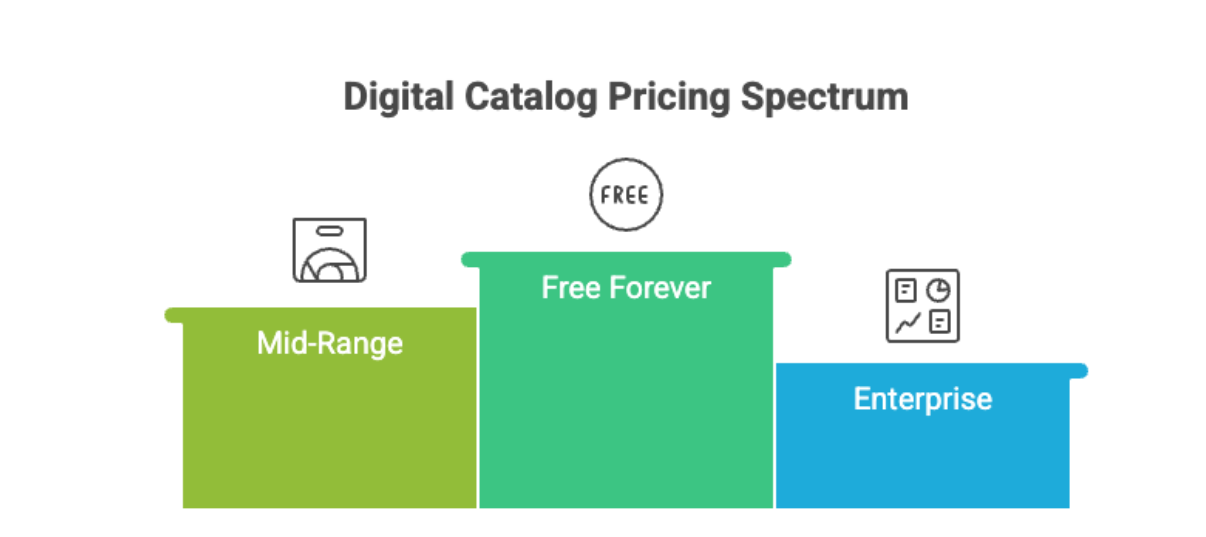
Because in 2026, “digital catalog” can mean four completely different things — and each one carries a very different price tag.
For some companies, it’s a flipbook marketing brochure.
For others, it’s an enterprise product data engine.
For many growing brands, it’s a lightweight link they share on WhatsApp.
Until you know which one you need, pricing will always look confusing. It helps to first get clear on what a digital catalog actually is because the category you need determines the price range that's relevant to you.
Let’s simplify it.
First: Why Pricing Feels So Inconsistent
In India, digital catalog software ranges from completely free tools to platforms costing ₹40–50 lakhs per year.
That’s not inflation.
That’s category difference.
A marketing flipbook tool is not the same as an enterprise PIM system.
A website-integrated catalog platform is not the same as a WhatsApp-first catalog layer.
Yet all of them show up under the same search term.
That’s why pricing looks chaotic.
The Real Cost Layers Behind Digital Catalog Software
1. Presentation-First Tools (Lowest Cost Tier)
These include platforms like Flipsnack or similar flipbook builders.
They’re built for design-heavy catalogs and lookbooks.
Typical pricing in India:
Around ₹30,000–₹50,000 per year for professional plans.
They work well if your goal is:
• Visual storytelling
• Marketing brochures
• Export presentations
But they are not designed for:
• Real-time inventory control
• High-frequency price changes
• Chat-based selling
They’re marketing tools, not operational selling systems.
2. Structured Catalog Systems for Growing Brands
This is where many Indian retailers and D2C brands land.
Mid-range catalog or PIM platforms like Plytix can cost between ₹5–10 lakhs per year depending on SKU count and features.
These systems provide:
• Structured product management
• High SKU capacity
• Multi-channel syncing
• Team collaboration
They’re valuable when product data complexity increases.
But they can be overkill for businesses where sales begin inside conversation instead of dashboards.
3. Enterprise PIM Systems (High Complexity, High Cost)
Enterprise platforms like Akeneo Enterprise or Salsify can easily reach ₹25–50 lakhs annually once onboarding, integrations, and support are included.
These systems are built for:
• Manufacturers
• Global marketplace sellers
• ERP-integrated businesses
• Large compliance-heavy catalogs
They're not overpriced. They're solving enterprise-level problems. For a full breakdown of which platforms sit in which category, the best digital catalog software in India comparison maps it clearly.
They’re solving enterprise-level problems.
But most Indian retailers and wholesalers simply don’t operate at that level of data complexity.
4. WhatsApp-First & Link-Based Catalog Platforms
Now we come to the category that’s growing fastest in India.
Instead of building a heavy ecommerce stack or enterprise system, many brands now use lightweight catalog platforms that generate a shareable link.
That link works inside:
• Instagram bio
• Broadcast messages
• Ads
• Google Business listings
Platforms like SellEzzy sit in this category. If you want to see what the actual setup looks like, how to create a digital catalog for WhatsApp covers the process step by step.
They are not enterprise PIM systems.
They are not flipbook designers.
They act as structured catalog infrastructure for conversation-led selling.
Because in India, sales often start in chat.
That changes the pricing equation.
Instead of paying for:
• Marketplace synchronization
• Multi-department data workflows
• ERP pipelines
You’re paying for:
• Bulk product upload
• Real-time price updates
• Variant control
• Searchable browsing
• Shareable link infrastructure
• Orders flowing back into WhatsApp
That naturally keeps cost closer to SMB-accessible ranges rather than enterprise budgets.
And that’s why pricing in this category looks dramatically lower than enterprise PIM systems — not because it’s “cheaper quality,” but because it solves a different layer of the funnel.
Comparison Cost Snapshot (2026 India)
Here’s a simplified cost overview based on publicly available pricing ranges:
Notice the pattern.
Cost increases with operational complexity.
Not with “popularity.”
Hidden Costs Most Businesses Miss
Even when the subscription looks affordable, businesses often forget:
• Onboarding fees (can reach ₹10–15 lakhs for enterprise systems)
• Per-user charges
• Data migration costs
• Implementation time
• Currency fluctuation (USD billing)
• 18% GST
The real cost is rarely just the plan price.
It’s the total ecosystem around it.
The Print vs Digital Reality in India
Many Indian brands still print seasonal catalogs — this is especially true in fashion, where seasonal drops make printing costs spike. Between design, printing, and distribution, annual costs can cross ₹8–10 lakhs easily. The digital catalog for fashion brands use case is where this cost shift becomes most visible.
A digital catalog system at even ₹1 lakh per year often reduces that dramatically — while staying editable in real time. That’s why adoption is accelerating. Not because digital is trendy. Because it’s financially rational.
So What Should You Actually Budget?
Instead of asking, “What’s the cheapest?”
Ask:
Where does my customer first interact with my product?
If it’s:
• Google → ecommerce matters
• Marketplaces → PIM matters
• WhatsApp or Instagram → link-based catalog matters
For chat-first brands, investing in structured catalog infrastructure (like platforms in the SellEzzy category) often delivers better ROI than overspending on enterprise data systems.
For marketplace-heavy brands, enterprise PIM investment makes sense. The right cost is the one aligned with your selling flow. If you're still deciding between a catalog layer and a full store, the digital catalog vs ecommerce website breakdown will help you invest in the right direction.
Final Perspective
Digital catalog pricing in India is not about cheap vs expensive.It’s about complexity vs relevance. Enterprise tools are costly because they manage enterprise complexity. Lightweight catalog systems cost less because they eliminate layers you don’t need. The smartest brands in 2026 aren’t choosing the most powerful software. They’re choosing the one that matches how they actually sell. And that’s where real return on investment begins.
Frequently Asked Questions About Digital Catalog Costs in India
How much does digital catalog software cost in India?
Digital catalog software in India can range from around ₹30,000 per year for flipbook tools to ₹25–50 lakhs per year for enterprise PIM systems. The actual cost depends on product volume, integrations, and business complexity.
What is the cheapest way to create a digital catalog?
The most affordable options include free PIM starter plans or entry-level flipbook tools. These are suitable for small product catalogs with limited SKU counts and basic publishing needs.
Is enterprise PIM software necessary for small or growing businesses?
No. Enterprise PIM systems are built for complex product ecosystems with multiple integrations. Many Indian brands selling through WhatsApp or social commerce operate efficiently using lightweight catalog platforms instead.
Is digital catalog software cheaper than printed catalogs?
In most cases, yes. Printed catalogs often involve recurring design, printing, and distribution costs. Digital catalogs eliminate reprinting expenses and allow real-time updates.
What factors increase digital catalog software pricing?
Pricing increases with SKU count, required integrations, onboarding support, advanced analytics, multi-user access, and enterprise-level infrastructure needs.