Best Digital Catalog Software in India (2026 Guide for Modern Retail & D2C Brands)
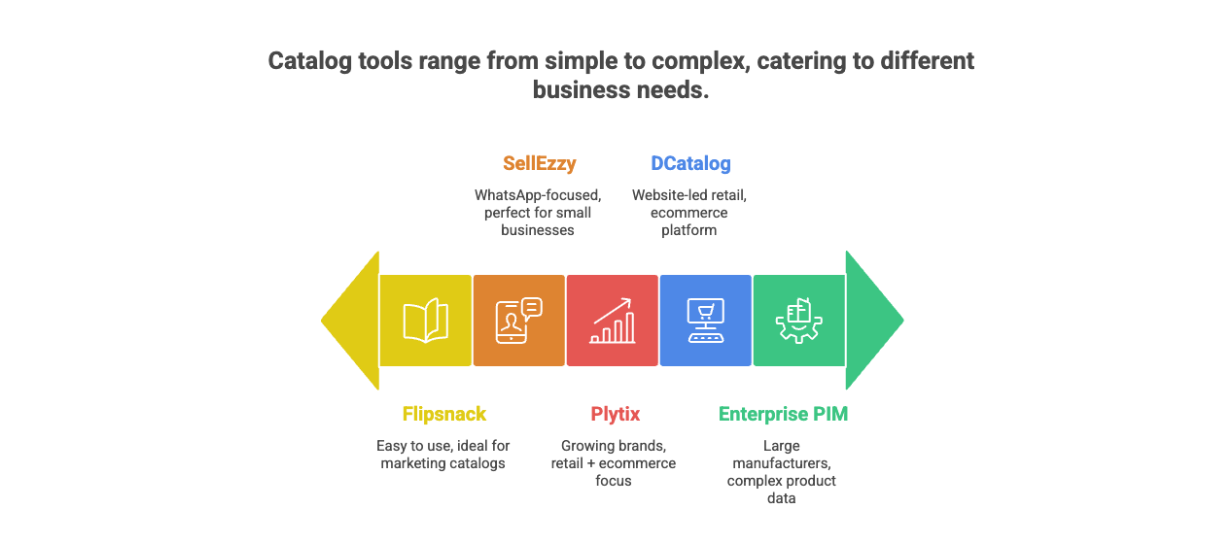
The best digital catalog software in India depends on how you sell.
• Large retail brands managing thousands of SKUs may need PIM systems like Plytix or Akeneo.
• Marketing-heavy brands may prefer design-focused tools like Flipsnack.
• Ecommerce-first businesses benefit from website-integrated platforms like DCatalog.
• Brands and sellers whose sales begin on WhatsApp often choose lightweight, link-based catalog platforms built for chat-led commerce.
There is no universal “best.” Only the best fit for your selling model.
Why Choosing Catalog Software in India Is Different
If you search “best digital catalog software,” most results assume a Western ecommerce environment.
But India operates differently.
• WhatsApp is a primary sales channel
• Mobile usage dominates desktop
• Buyers prefer conversation before checkout
• Many brands run hybrid models (website + chat)
• Price updates are frequent in categories like fashion, gold, wholesale goods
This changes what “best” actually means.
In India, a catalog isn’t just a marketing document.
It’s infrastructure for how buyers browse before they decide.
What Is Digital Catalog Software? (For Clarity)
Digital catalog software is a platform that allows businesses to organize, publish, and share product collections online. If you're new to this space, understanding what a digital catalog is first will make the software comparison much clearer.
It typically includes:
• Product images
• Prices
• Descriptions
• Categories
• Search or filter options
• Sharing via link
• Sometimes analytics
The difference lies in how that catalog integrates into your sales flow.
The Four Types of Digital Catalog Software in India
Instead of ranking tools randomly, let’s understand the categories.
1. Enterprise PIM Systems (Product Information Management)
Examples: Plytix, Akeneo, Salsify
Best for: Large retailers, manufacturers, multi-channel brands
These platforms manage structured product data at scale.
They help businesses:
• Centralize product information
• Sync across marketplaces
• Manage thousands of SKUs
• Maintain data governance
They are powerful.
They are structured.
They are also complex and costly.
Enterprise PIM tools make sense when product data is your operational backbone.
They are not built for casual WhatsApp sharing or lightweight social commerce. To understand how Indian sellers actually use WhatsApp catalogs day-to-day and where those catalogs break — the context is quite different from enterprise use cases.
2. Design-First Flipbook & Publishing Platforms
Examples: Flipsnack, Catalog Machine, YUDU
Best for: Marketing teams, exporters, visual brands
These tools focus on presentation.
They allow you to:
• Convert PDFs into interactive flipbooks
• Design visually rich catalogs
• Embed videos or links
• Share marketing-ready brochures
They are excellent for branding and presentation.
But they are not optimized for:
• Real-time stock updates
• Fast SKU management
• Chat-driven selling
They shine in visual storytelling, not operational selling.
3. Ecommerce-Integrated Catalog Platforms
Example: DCatalog
Best for: Website-led ecommerce retailers
These platforms integrate closely with shopping carts and ecommerce systems.
They are ideal when:
• Your website is your primary selling engine
• You drive traffic via ads or SEO
• Checkout happens on-site
They enhance ecommerce infrastructure.
But if most of your sales begin inside WhatsApp conversations, they may not solve the core friction.
4. WhatsApp-Native & Link-Based Catalog Platforms
This is where India’s shift is happening.
Instead of building heavy ecommerce systems, many brands now share a live catalog link that works seamlessly inside WhatsApp and social media.
This approach focuses on:
• Instant loading on mobile
• Real-time updates
• Bulk product upload
• Searchable product browsing
• Structured order flow back into WhatsApp
Platforms like SellEzzy operate in this category.
And it’s important to clarify:
This is not about business size.
It’s about selling behavior.
Brands that sell through:
This is not a niche edge case. It's where most Indian selling actually happens and it's also exactly why sellers lose orders in WhatsApp chats when the catalog infrastructure doesn't match the selling flow.
• Instagram DMs
• WhatsApp inquiries
• Distributor conversations
• Social-first discovery
often need infrastructure that supports chat-based commerce, not replaces it.
That’s where lightweight catalog systems naturally fit.
They’re not competing with enterprise PIM tools.
They’re solving a different layer of the funnel.
Quick Comparison: Which Software Fits Which Model?
The mistake many Indian brands make is choosing infrastructure that doesn’t match how customers actually buy.
What Makes a Catalog Platform “Good” in India?
When evaluating digital catalog software in India, look for:
• Mobile-first performance
• Easy bulk upload
• Real-time editing
• WhatsApp compatibility
• Lightweight browsing experience
• Basic analytics visibility
• Affordable pricing tiers
In India, speed and simplicity often outperform complexity.
Where SellEzzy Fits
SellEzzy sits in the WhatsApp-first, link-based category.
It focuses on:
• Excel bulk product upload
• Real-time price updates
• Product variants (size, color)
• Out-of-stock control
• Searchable browsing
• Shareable catalog link
• Orders flowing back to WhatsApp
• Basic analytics visibility
It doesn’t attempt to be a full enterprise PIM. It doesn’t try to replace ecommerce websites. It acts as a catalog infrastructure layer for businesses that begin their sales journey inside conversation. If you want the practical setup, how to create a digital catalog for WhatsApp walks through both the free and platform-based methods. That positioning makes it relevant not only for small sellers, but also for growing D2C brands and regional retailers that rely heavily on chat-based discovery.It’s not about scale.It’s about flow.
Frequently Asked Questions
What is the best digital catalog software in India?
There is no universal best. Enterprise brands prefer PIM systems like Plytix. Marketing teams use tools like Flipsnack. Ecommerce retailers use DCatalog. WhatsApp-first sellers often choose lightweight, link-based catalog platforms.
Is digital catalog software expensive in India?
Pricing varies widely. Entry-level tools may start under ₹1,000–₹5,000 per month, while enterprise PIM systems can cost ₹20 lakhs+ annually.
Can small and mid-size brands use digital catalog software?
Yes. Many modern platforms offer scalable plans suitable for growing brands, wholesalers, and D2C businesses.
Is a digital catalog better than a PDF?
For mobile-first buyers, yes. Digital catalogs are searchable, instantly updatable, and easier to share compared to static PDFs.
Does digital catalog software integrate with WhatsApp?
Some integrate directly. Others work by sharing a live link inside WhatsApp conversations. Lightweight catalog systems are typically more compatible with chat-driven selling.
Final Perspective (2026 Reality)
The question is no longer:
“Which software is the best?”
The smarter question is:
Where does my sale actually begin?' That same logic is what drives the digital catalog vs ecommerce website decision and it's worth understanding before committing to any platform.
If your buyer journey starts on Google → ecommerce infrastructure matters.
If your buyer journey starts in WhatsApp → conversation-compatible catalog systems matter.
If your brand sells through distributors → structured data systems matter.
India’s commerce ecosystem is hybrid.
The brands winning in 2026 aren’t choosing the most complex tool.
They’re choosing the tool that aligns with how their customers behave.
And that alignment is what actually makes catalog software effective.